
Finding a teacher should not be a leap of faith.
Most directories hand you a list of strangers and wish you luck. You agree a price in a chat and hope the person who turns up is the one in the photograph.
Here, what has been checked is on the profile, and the price you see is the price you pay.
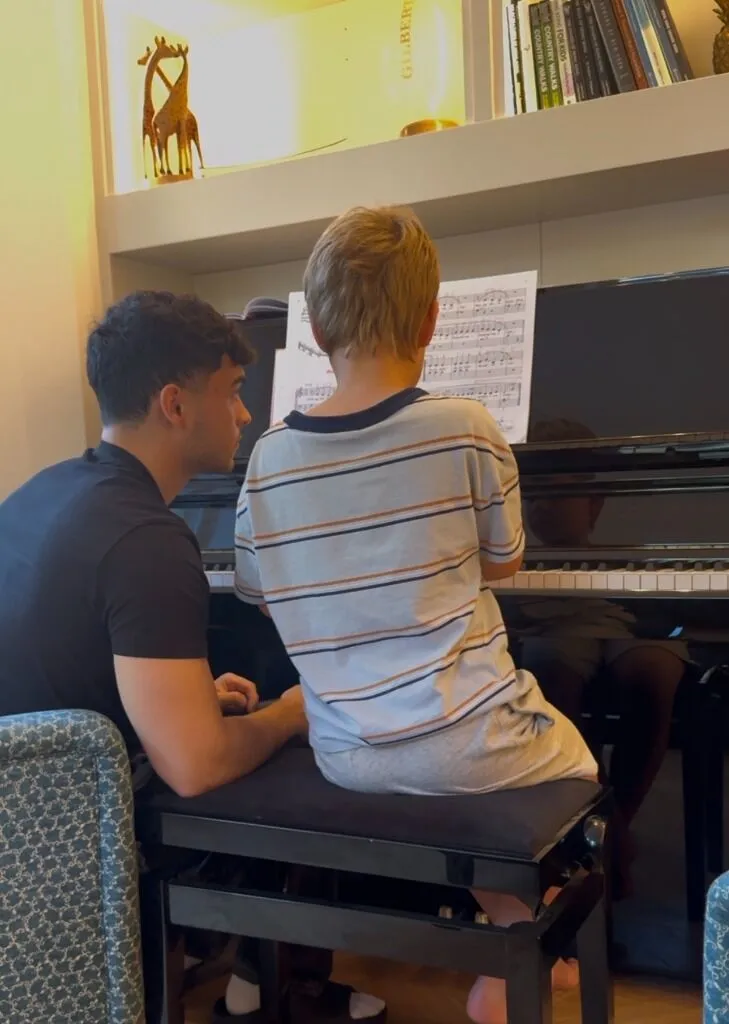
A teacher built this. That is the whole reason it works this way.
I taught piano for years before I wrote a line of it. I have sat in the parents' evening, prepared the exam pieces, and seen what a good teacher changes in a child. That is the thing this site is meant to help you find.
A list of names is not the same as somebody you can trust.
Finding a music teacher usually means a list of names and a leap of faith. A directory can tell you somebody teaches the violin; it rarely tells you whether they have been checked, what a lesson actually costs, or what happens if it goes wrong.
Most of the risk lands on you before you have met anyone. You send messages into the dark, agree a price in a chat, and hope the person who turns up is the person in the photograph.
What we do instead
LearnMusic exists to move that risk off the learner. Every teacher has a profile that says what has been verified and what has not, the price you see is the price you are charged, and the booking, the payment and the conversation all stay in one place with a record attached.
None of that makes a teacher good. It makes them accountable, and it lets you judge the teaching instead of the paperwork.
Every way LearnMusic earns, in full.
Your side is the first line, and it is the whole of what you pay. The rest is what teachers pay us, published here so you can see there is nothing behind the price on a profile.
Students pay a 5% service fee
A 5% service fee is included in the price you see, and it covers secure payment, rescheduling and the refund process when a lesson goes wrong. It is shown inside the price from search through to checkout — the number you see first is the number you pay.
That fee is the whole business model
The service fee sits on the student's bill and is added to the teacher's rate rather than taken out of it. It is how the platform is paid, which is what lets teaching here cost a teacher £0 with 0% commission and stay that way.
0% commission for every teacher
0% LearnMusic platform commission on lesson bookings, for every teacher, forever. Payment-processing fees may apply. There is no subscription, no lesson cap and no cohort that gets a better rate than the teacher who joins tomorrow.
Free accounts rank on merit
Free accounts are ranked on merit. Optional paid visibility Boosts are coming soon and will add visibility. They will never be required to teach.
Arun McGoay
Founder
I have been a student of music since I was three, a piano teacher since I was sixteen, and a marketplace user for as long as I have been trying to fill a teaching diary. LearnMusic is the platform I wanted and could not find.

Built bya teacher.
Former pupil, Chetham's School of Music
From age three
A student first
I started piano and violin at three and never really stopped. I played violin and viola in the Weinberg Quartet, and in youth and school orchestras — including at Chetham's School of Music, where I studied piano. I reached Grade 8 at thirteen with 148 out of 150, won my age category at an international Chopin competition, and spent my teens inside the Chopin Études, the Bach Partitas and the Mozart piano concertos. Everything I know about what a good lesson feels like, I learned from the receiving end of one.
From age sixteen
Then a teacher
At sixteen I started a small piano teaching practice in the Ribble Valley in the north west of England, and built it to around fifteen students a week — preparing them for ABRSM exams, and trying to leave them with something that outlasts a grade certificate. I did it the way you did it then: leaflets, doors, and word of mouth.
Bournemouth
Then a studio
Two years later I moved to Bournemouth and started Bournemouth Music School, now Sandbanks Piano School, and grew it to twenty-five students at one time. That took a system — how you present yourself, how quickly you reply, how you handle a booking, how you follow up a lesson. The system is the thing that scaled, not the hours.
And now a platform
LearnMusic is that system, turned into software. Not something else to learn — something to use. The parts I did by hand for years are the parts the platform now does for every teacher on it.
Twenty years on that bench is where every rule on this site came from.
That system is now this site.
It cannot tell you a teacher is the right one for your child. Nothing can promise that. What it does is put everything you would otherwise have to ask for — the checks, the price, the terms — in front of you before you decide.
Enough to judge a teacher before you pay one.
- PianoViolin
Your name
Piano and violin · Your town
Rate
£47.25
Next free
Tue 4pm
Book nowAsk a questionA profile that tells you enough to decide
Rates, instruments, where they teach, and which checks have actually been reviewed — identity, DBS, qualifications. What has not been checked is left blank rather than dressed up as a badge.
Your student
Online now
Can we move Thursday to 5pm?
Done. Moved to Thursday, 5pm.
Lesson notes
Scales up to G major. Ten minutes a day.
Thank you, I'll do it tonight.
Ask before you commit
Message a teacher about your goals, your child's grade, or a tricky time slot before any money moves. The conversation stays attached to the booking rather than scattered across four apps.
One price, one place to pay
The rate on the profile is the amount you are charged, service fee included. Payment runs through Stripe where checkout is enabled, and your card details never reach us.
Terms you can read first
Cancellation, refunds and safeguarding are published before you are asked to agree to them — both halves of the cancellation rule, not only the half that suits us.
Read the cancellation rule
The screens above are illustrations of the product; the figures on them are examples. None of this makes a teacher good — no platform can promise that, and we do not. What it does is put the checks, the price and the terms in front of you before you book, so what you are judging is the teaching.
Built by people who have taught the lessons.
LearnMusic is a small team, and it is built by people who have taught, performed, or sat through enough bad lessons to know the difference.
Musicians before anything else
The people making product decisions here have prepared students for exams, run a teaching diary, and played to a room. It shows in what gets built and, more often, in what does not.
We work in public
Pricing, commission tiers, safeguarding and cancellation terms are published before you are asked to agree to them. If something changes, it is announced before it applies, not after.
Nobody buys their way up the results
Free accounts are ranked on merit. Optional paid visibility Boosts are coming soon and will add visibility. They will never be required to teach.
What you can check before you book.
Trust here is evidence on a profile, not a badge that means nothing. Teachers set their own rates, typically £26.25 to £84.00 per hour, and every check we have reviewed is named.
- Profiles show the identity, DBS and qualification checks that have actually been reviewed — not a badge that means nothing.
- Booking, messaging and pricing stay attached to the teacher's profile rather than scattered across four apps.
- Safeguarding terms, cancellation terms and how verification works are all readable before you book.
If you have to cancel.
For student cancellations the cutoff is 24 hours. It is deliberately not symmetrical: a slot held for you and cancelled at short notice cannot be filled, so your teacher is paid for it. A slot your teacher cancels was never yours to lose.
- Cancel at least 24 hours before your lesson and you are refunded in full.
- Cancel less than 24 hours before, and the lesson is charged. Your teacher is paid for it: the time was held for you and cannot be filled at that notice.
- If your teacher cancels, you are refunded in full whatever the notice.
One place to find a teacher. One to practise between lessons.

The marketplace. Students browse profiles, check what has been verified, book, pay and message — all in one place, attached to the teacher rather than scattered around it.

Opelo is the separate practice-support layer. It is not bundled into normal lesson bookings, and that separation is intentional so both products stay legible. It is built to help a student practise well between lessons, and it never pretends to replace the teacher.
The best proof of any of this is a teacher's profile.
Go and read one. If it tells you what you need before you book, the rest of this page was true.