

Classical Voice & Opera
Develop bel canto technique, legato singing, breath management, and resonance across your full range.

Every profile is identity checked before it goes live. Compare rates and lesson format, then message a teacher before you book.
Piano, guitar, bass and drum tutor
Vocal coach
Songwriting/Singing/Piano/Guiitar/Production Tutor
Online Piano, Guitar, Drums, Singing, Violin
Your voice is the most personal instrument you will ever play, and it is the only one you carry with you everywhere. Singing lessons in the UK develop breath control, vocal placement, range extension, and the ability to communicate emotion directly through text and melody. Unlike any other instrument, vocal training involves understanding your own body as the resonating chamber, learning to manage the delicate muscles of the larynx, soft palate, and diaphragm. From operatic arias to West End belting, jazz standards to pop performance, vocal training transforms the instrument you were born with into one you can rely on.
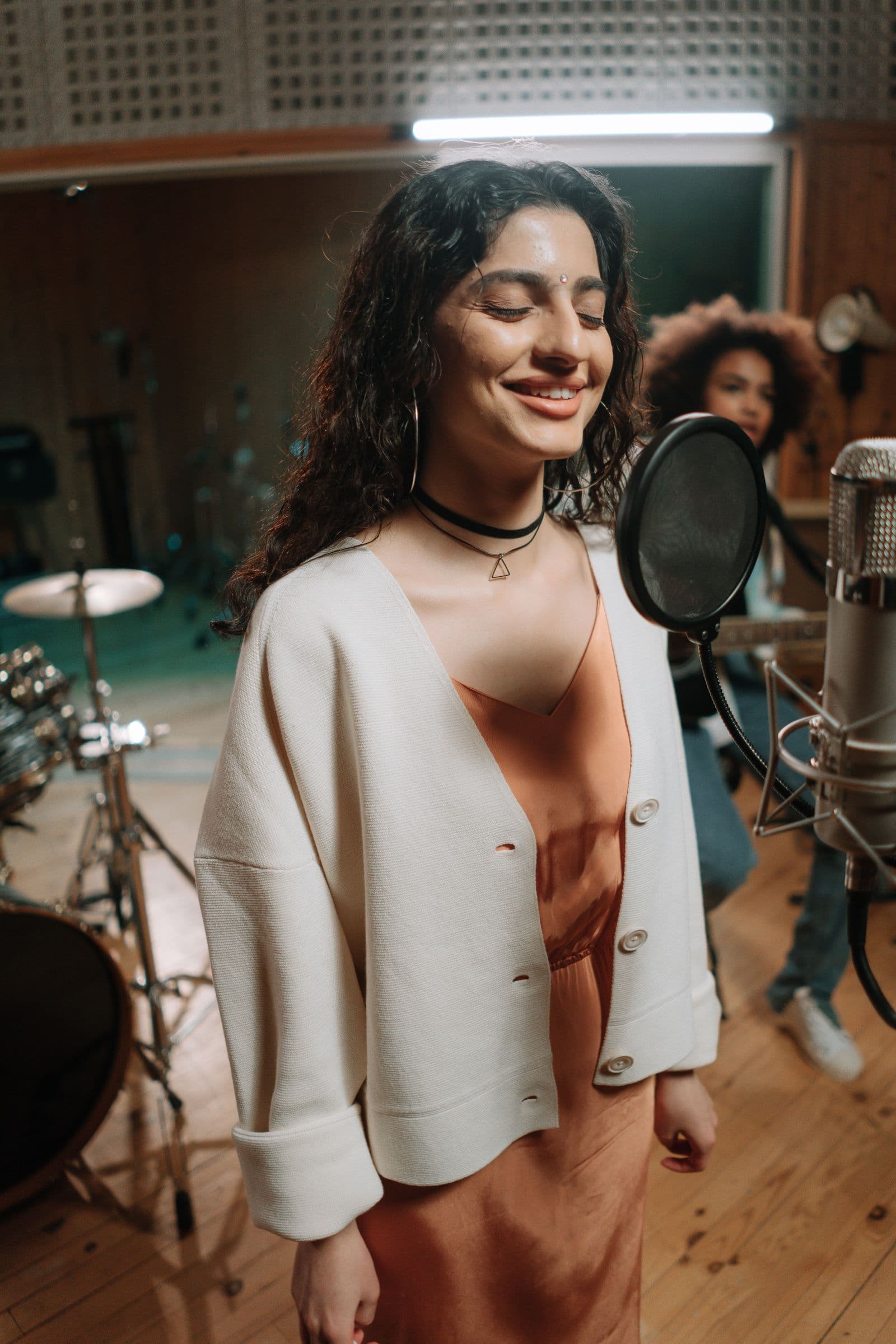

Different sounds. Your starting point.
Develop bel canto technique, legato singing, breath management, and resonance across your full range.
Learn to belt, mix, and act through song with the technical control required for West End and Broadway repertoire.
Develop a contemporary vocal sound with proper technique to protect your voice.
Explore the jazz standard repertoire, scat singing, improvisation, and phrasing.
Strengthen your ability to hold a part, blend with other voices, and tune intervals precisely.
Prepare for graded singing exams with focused work on set songs, sight singing, aural tests, and viva voce questions.
Your voice is always with you.
Your breath, your sound, your expression.
Based on our current teachers, prices range from £10.5 to £42 per hour as of July 2026, with an average of £34. Singing lesson prices in the UK vary by the teacher's specialism. Classical voice teachers with opera or conservatoire backgrounds, and musical theatre coaches with West End credits, tend to charge more than general vocal coaches. The investment reflects their specialised technical knowledge.
The vast majority of people can learn to sing well with proper training. Pitch accuracy, tone quality, and range are all skills that develop through consistent practice and good technique. Singing teachers in the UK regularly help students who believed they were tone deaf discover a voice they are proud of.
Children can enjoy group singing from a very young age, but formal one-to-one vocal technique lessons are generally recommended from around age 8 or 9. During and after puberty, when the voice is changing, a skilled UK voice teacher can guide students through the transition safely.
Voice type (soprano, alto, tenor, bass, and subtypes like mezzo-soprano or baritone) is determined by your range, tessitura, timbre, and where your voice sits most comfortably. A singing teacher in the UK will assess this during your first lessons and choose repertoire that suits your natural voice.
Yes. The breath control, resonance, and projection skills developed in singing lessons directly improve your speaking voice. Many professionals in the UK take singing lessons specifically to strengthen their voice for presentations, teaching, or public speaking.
ABRSM, Trinity, and LCM all offer graded singing exams in classical and musical theatre pathways. LAMDA offers exams focused on musical theatre and acting through song. Your UK singing teacher can advise which pathway and board align with your goals and repertoire preferences.