

Classical Flute
Study the rich classical flute repertoire from Bach and Mozart through to Debussy, Poulenc, and modern works.

Every profile is identity checked before it goes live. Compare rates and lesson format, then message a teacher before you book.
Current Head of Music in Pre-Prep
Clarinettist and Woodwind Doubler
Fun and engaging lessons for all abilities
Flute and Music theory lessons
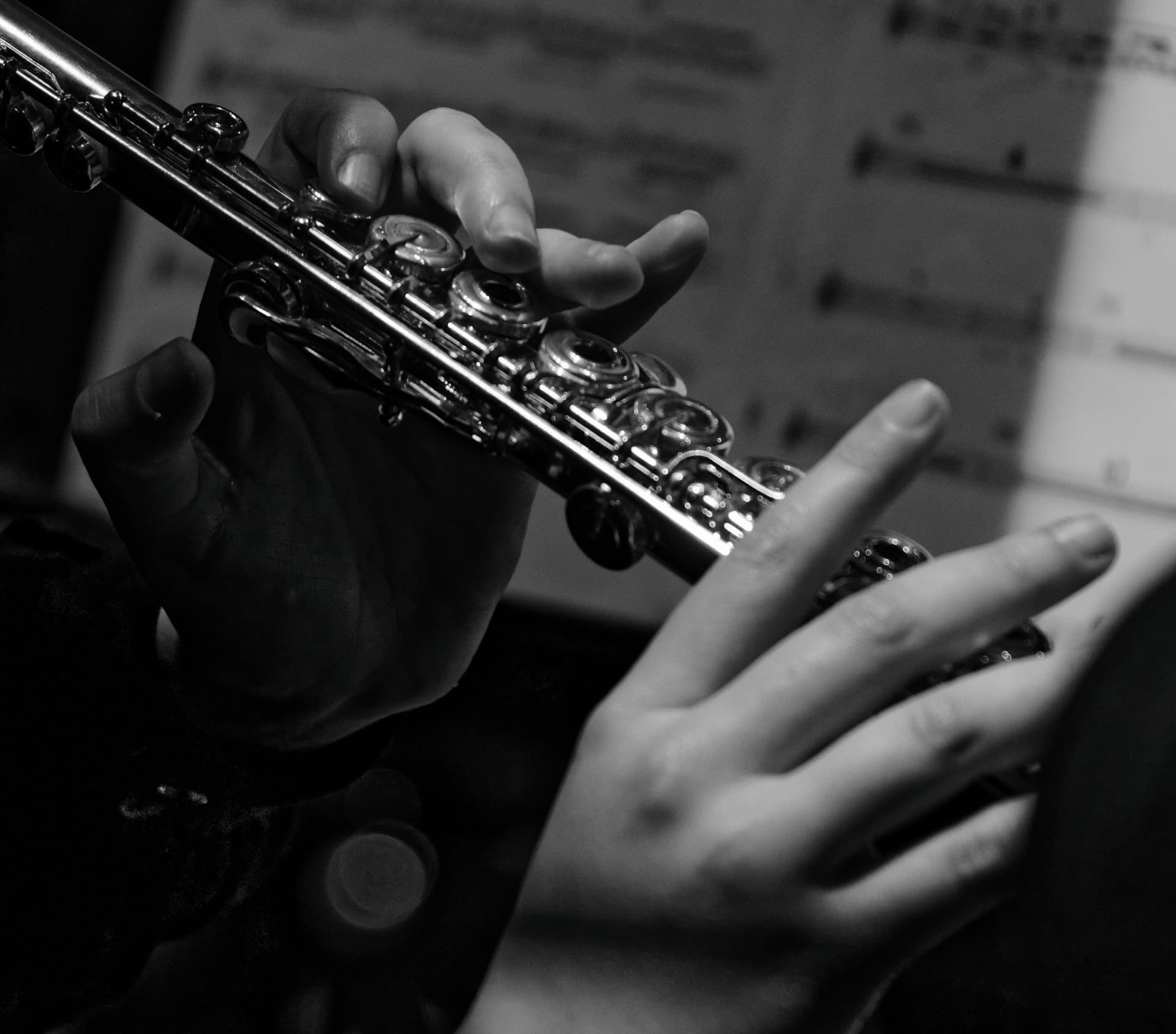
The flute is one of the oldest instruments in the world, and the modern concert flute produces a tone of remarkable purity, agility, and brilliance. Learning flute in the UK develops precise breath control, embouchure flexibility, and the finger speed needed to execute rapid passages that are a hallmark of the instrument. As the soprano voice of the woodwind family, the flute is prominent in orchestras, wind bands, chamber groups, and jazz ensembles. Its lightness and portability make it practical for students of all ages, while its repertoire stretches from Baroque sonatas to contemporary extended techniques.
Different sounds. Your starting point.
Study the rich classical flute repertoire from Bach and Mozart through to Debussy, Poulenc, and modern works.
Explore jazz flute in the tradition of Herbie Mann and Hubert Laws.
Develop skills on piccolo, alto flute, or bass flute as extensions of your concert flute playing.
Prepare for orchestra auditions and develop ensemble skills including intonation, balance, blend, following a conductor, and handling exposed solo passages.
Thorough preparation for graded flute exams, covering set pieces, scales and arpeggios, sight reading, and aural tests.
A gentle introduction to the flute family, starting with embouchure formation, producing a clear tone, basic fingerings, and simple melodies.
The flute is one of the lightest orchestral instruments and fits in a small case you can carry anywhere.
Breath and technique give your sound its character.
Based on our current teachers, prices range from £31.5 to £42 per hour as of July 2026, with an average of £37. Flute lesson prices in the UK are influenced by the teacher's orchestral experience, conservatoire training, and whether lessons include piccolo coaching. Specialist orchestral flautists and those with international performance careers tend to charge more.
Most children start flute between ages 7 and 9, once their arms are long enough to hold the instrument and their adult front teeth are established. Curved headjoints are available for smaller children. Your UK flute teacher can assess physical readiness at a trial lesson.
Yes. The flute develops strong reading skills, breath control, and musical ear. Its logical fingering system and single-line focus make it a clear and rewarding first instrument. Many UK schools include flute in their instrumental programmes from Year 3.
With regular weekly lessons and daily practice of 20 to 30 minutes, most flute students in the UK reach Grade 5 within 3 to 4 years. Progress depends on practice consistency, natural aptitude, and the quality of teaching.
A student-model flute from a reputable manufacturer like Yamaha, Trevor James, or Jupiter is an excellent starting point and costs significantly less than a professional instrument. UK music shops often offer rental-to-buy schemes. Avoid very cheap unbranded flutes, as they cause tuning and tone problems.
Absolutely. Adult flute students are common and progress well. Your embouchure and breath control develop at any age, and adults bring musical understanding and discipline. Many flute teachers in the UK welcome adult beginners and returners who want a flexible, enjoyable approach.
